


Nirmala Sitharaman Refutes ‘Tariff King’ Label, Says India Follows Only 8 Tariff Slabs
Union Finance Minister Defends India’s Trade Policies
Union Finance Minister Nirmala Sitharaman refutes ‘Tariff King’ label, clarifying that India now follows a simplified tariff structure with only eight customs duty slabs, including a zero-per-cent rate. Addressing the EXIM Bank Trade Conclave in Delhi, Sitharaman strongly defended India’s trade openness and dismissed any misconceptions about the country being protectionist.
Simplification of Customs Structure
Speaking at the conclave, Nirmala Sitharaman explained that recent budget reforms aimed to simplify the customs duty structure. “Earlier, we had 14 different tariff rates. With the latest budget, we have removed seven of them, reducing the number to just eight,” she said. This major reform was designed to help domestic manufacturers, promote exports, and ease global trade.
Effective Duties Lower Than Approved Ceilings
The Finance Minister highlighted that while Parliament approves upper tariff ceilings, the real rates that get implemented are much lower. “What gets gazetted is only the upper limit. The actual duty India imposes is significantly below those limits,” she clarified. This move is part of the government’s continued efforts to make Indian trade practices more transparent and investor-friendly.
Boosting Trade Through Reforms
Nirmala Sitharaman refutes ‘Tariff King’ label by pointing out that these reforms are meant to support exports and domestic manufacturing. The removal of multiple tariff rates simplifies processes for importers and exporters. It also sends a strong message to the global community that India is committed to open trade and business ease.
India-U.S. Trade Talks Progressing
As part of the government’s ongoing trade strategy, India is actively negotiating a bilateral trade agreement with the United States. According to Sitharaman, an interim deal is expected by July 9, with the first phase of the agreement likely to be finalized by the autumn.
U.S. Demands and Indian Position
Currently, U.S. tariffs on Indian goods are around 10 per cent. Washington is pressing for increased market access, especially for agricultural products. Sitharaman emphasized that India is open to fair discussions, but its interests will remain protected.
Encouraging Exporters in Tough Times
Praising Indian exporters for their resilience in tough global conditions, Sitharaman highlighted three key export trends:
- Sustained growth in exports, even in a slow global economy.
- Shift from raw materials to high-tech, value-added products.
- Exploration of new markets outside recession-affected Europe.
Five-T Strategy to Empower Exporters
The government’s support to exporters is centered around five core focus areas:
1. Transport and Logistics
Improving infrastructure and connectivity to ensure faster and cheaper goods movement.
2. MSME Assistance
Providing targeted financial and operational support to Micro, Small and Medium Enterprises.
3. Trade Finance
Making credit accessible and affordable for exporters through innovative financial products.
4. Cluster Development
Boosting local manufacturing hubs to increase employment and export potential.
5. Free Trade Agreements
Negotiating new FTAs with countries like the UAE, UK, EU, Australia, and EFTA to reduce tariffs and expand market access.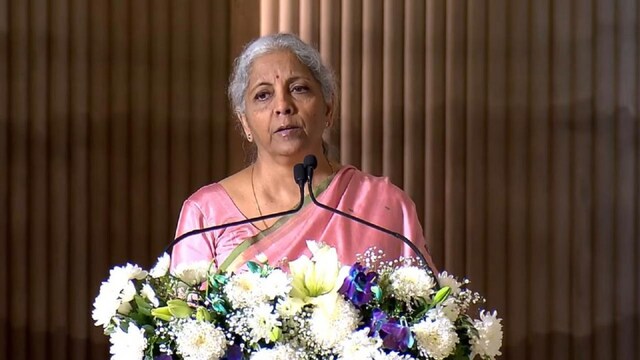
Global Value Chains and Local Manufacturing
Nirmala Sitharaman refutes ‘Tariff King’ label by citing India’s increasing role in global value chains. She mentioned Apple’s Indian suppliers, who now add over 20% local value to iPhones being manufactured in India. This is a sign of deeper integration and reflects India’s capacity to contribute to global supply chains.
Role of PLI Schemes
The Production-Linked Incentive (PLI) schemes have played a major role in boosting exports across key sectors such as:
- Electronics
- Pharmaceuticals
- Food Processing
- Telecom Equipment
As per government data, products worth over ₹5.31 lakh crore (approximately $62 billion) have already been exported under PLI schemes.
Private Sector Participation Encouraged
To sustain and enhance trade growth, Sitharaman urged the private sector to increase investment. She stressed the need for companies to innovate and adopt risk-sharing models. She also called for advanced financial advisory services to help Indian exporters compete on a global scale.
Conclusion
In summary, Nirmala Sitharaman refutes ‘Tariff King’ label by presenting strong data and reforms that show India’s commitment to free and fair trade. With only eight customs duty slabs remaining, and multiple trade agreements in progress, India is paving the way for a more open and simplified trading system. Through consistent reforms, local manufacturing promotion, and export-driven policies, the government continues to push India closer to becoming a leading global trade player.


